Hearing: A Gift of Life
Hearing is one of the most crucial senses for a child’s integral development. It allows children to perceive and react to the world around them, making it vital for learning, social relationships, and language acquisition.
Unfortunately, hearing loss (hypoacusia) is widespread: 5 out of every 1,000 live newborns present this condition. When detected late, it causes severe difficulties in language learning, communication problems, and a negative impact on cognitive development.
Why is Early Detection Crucial?
The establishment of auditory function and communication takes place during the first two years of life. Therefore, diagnosis and treatment must begin very early.
-
The Goal: Detect hearing loss ideally before 3 months of age and initiate intervention before 6 months.
-
The Benefit: Early diagnosis takes advantage of the baby’s neuroplasticity, increasing the number of children who successfully develop normal language, improving their future prospects and social integration.
What Does the Screening Test Involve?
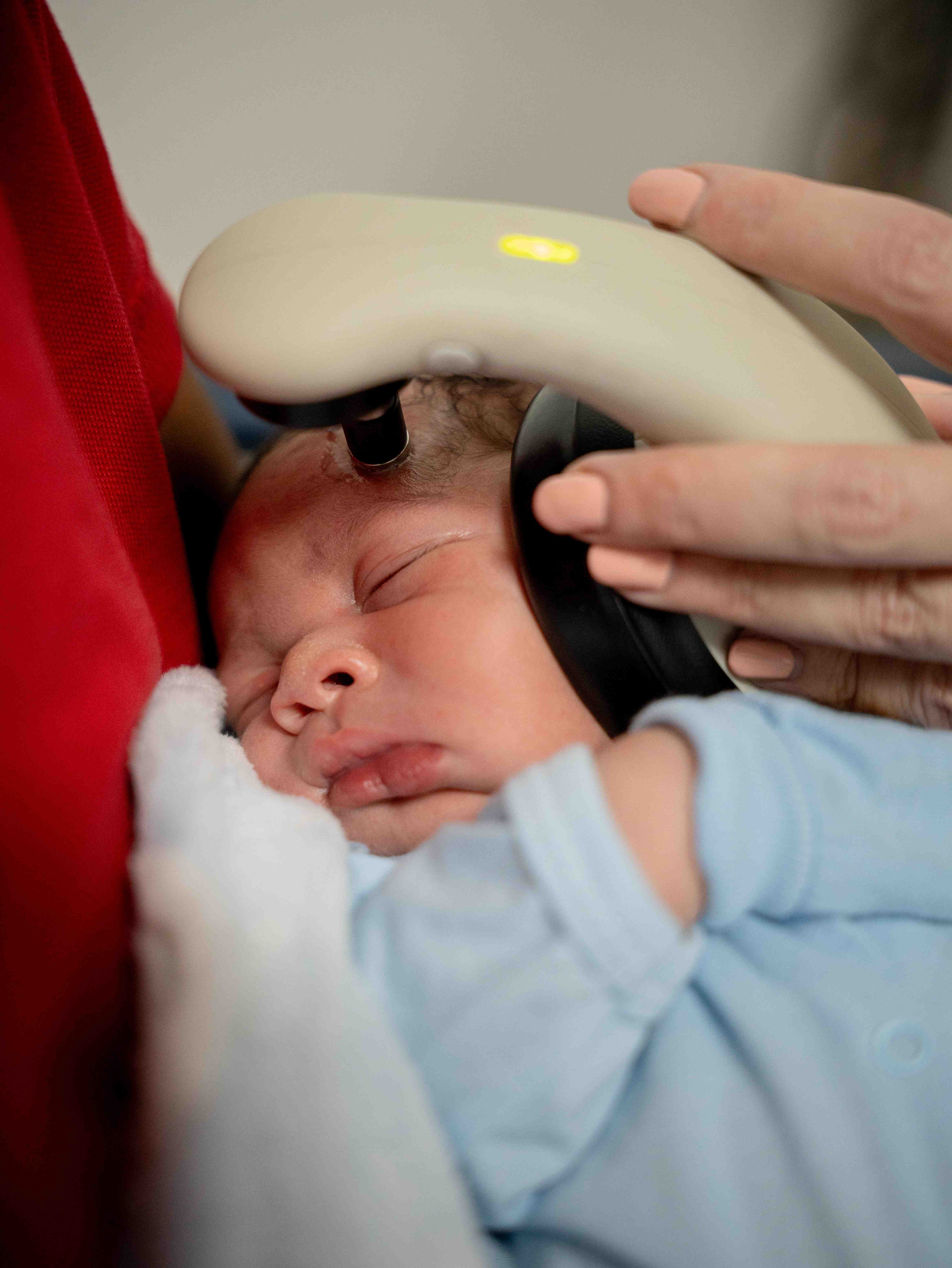
Neonatal audiological screening is the first step in detecting deafness in time. This exam should be performed in the maternity or neonatology ward before hospital discharge.
-
Safe: It is completely painless and harmless for the baby.
-
Simple: It requires no premedication or anesthesia.
-
Timing: It is performed while the child is calm or asleep.
Techniques Used
Otoacoustic Emissions (OAE): A small probe is placed in the ear canal that emits very brief, low-intensity sounds. This test provides information on the functioning of the cochlea.
Automated Auditory Brainstem Response (AABR): Earphones and electrodes are placed on the baby’s ears/head to measure brain electrical activity in response to sounds.
What if the baby does not pass the test?
If the baby does not pass, it does not necessarily mean they are deaf. The result can be influenced by ambient noise or the presence of birth debris or mucus in the middle ear.
-
Step 1: A new appointment will be scheduled to repeat the screening within the first month of life.
-
Step 2: If the baby does not pass the second test, they will be referred to an Otolaryngologist (ENT) for diagnostic confirmation using complementary tests such as Clinical BERA/ABR.
Risk Factors for Hearing Loss
It is crucial to remain vigilant for risk factors associated with late-onset or progressive hearing loss. Even if your baby passes the initial test, follow-up is recommended if they present:
-
Family History: History of childhood, early, progressive, or late-onset hearing loss.
-
Intensive Care: Stay in the Neonatal Intensive Care Unit (NICU) for more than 5 days or mechanical ventilation for at least 5 days.
-
Birth Complications: Hyperbilirubinemia requiring exchange transfusion, asphyxia, or hypoxic-ischemic encephalopathy.
-
Ototoxic Medications: Administration of aminoglycosides (Gentamicin, Tobramycin, etc.) for more than 5 days.
-
Severe Infections: In-utero infections (Rubella, Syphilis, CMV, Zika) or postnatal infections such as bacterial/viral meningitis or encephalitis.
-
Clinical Findings: Craniofacial malformations or syndromes associated with hearing loss.
Auditory Development Milestones: What Should You Observe?
Parents and pediatricians should monitor auditory development during health check-ups (recommended at 2, 4, 9, and 24 months).
From Birth to 6 Months
-
0 to 3 Months: The baby startles at loud sounds. They react or stop activity to voices or noise. They wake up to certain noises and quiet down or smile when spoken to. They make pleasure sounds (cooing) and have different cries for different needs.
-
4 to 6 Months: The baby moves their eyes toward sounds and responds to changes in your tone of voice. They turn their head when called softly and pay attention to music. They begin to babble with sounds like p, b, and m. They laugh out loud.
From 7 Months to 2 Years
-
7 Months to 1 Year: Enjoys games like peek-a-boo. Turns toward noises made out of sight. Repeats syllables like “Ma-Ma” or “Da-Da” and reacts to their name. By the first birthday, they usually have one or two words.
-
1 to 2 Years (12 to 24 months): Says more words each month. Points to body parts when asked. Follows simple commands and understands basic questions. They begin to put two words together (e.g., “more cookie,” “mommy’s book”).
Oír Para Vivir Foundation (Support Resource)
The Oír Para Vivir Foundation is a non-profit entity based in Hato Mayor, Dominican Republic, focused on helping people with hearing disabilities.
Free Hearing Tests! Oír Para Vivir offers:
-
Free Hearing Tests for newborns and children.
-
Hearing Aid Donations and necessary follow-up for vulnerable individuals.
If you have the slightest doubt about your child’s or patient’s hearing, do not hesitate to refer them or contact the foundation.
-
Phone: 809-750-3654
-
Address: Carretera Yerba Buena, 25000, Hato Mayor, Rep. Dom. (Behind the passion fruit processing plant).